

Suction Cleaners
Hayward Navigator
Zodiac G-3
Zodiac X7
Automatic Cleaners
Hayward SharkVac
Hayward
Tigershark
Hayward
TigerShark2
Hayward TigerShark QC
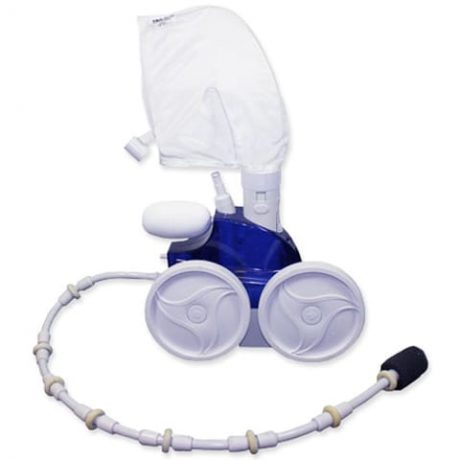
Pressure Cleaners Polaris 360
Polaris 280
Polaris 380 Polaris 480 Pro
Polaris 3900s
Leaf Canisters
|
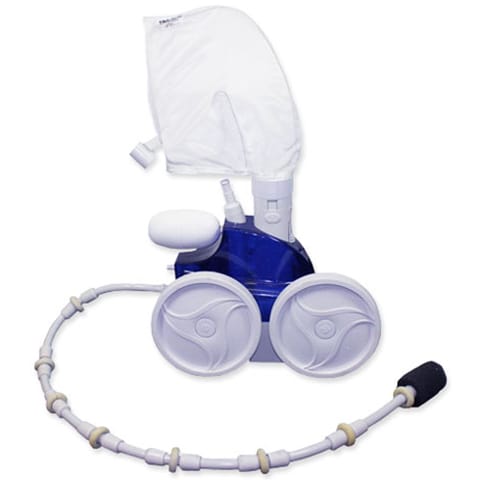
Polaris 380
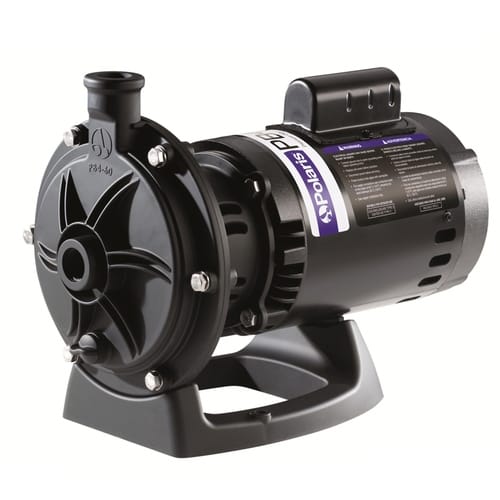
The 380 runs
off its own booster pump, working independently
from the rest of your pool system. This enables
the 380’s three jets to provide greater vacuum
power and faster cleaning. The 380
vacuums, sweeps and scrubs the bottom and walls of any size or shape
in-ground pool, be it gunite, fiberglass or vinyl-lined. The large
bottom opening picks up debris like leaves, acorns and pebbles.
Pool Warehouse PIP#287-60
|
Offer valid
in USA and Canada only |
|
*Booster pump
required for operation. |
|
|
|
The Polaris 380 is
covered by the Polaris 10/2 limited warranty (when
registered) with over one thousand warranty
service centers to give you assistance. There is
also a Polaris Black Max, a black model of the 380
for dark-bottom pools.
|
POLARIS
380 Includes: head, bag, 31ft. hose, in-line backup valve and sweep
hose. $829.00
|
|
|
POLARIS
380 "BLACK MAX" Includes: head, bag, 31ft. hose, in-line backup valve and sweep
hose. $885.00
|
|
|
POLARIS
380 Complete Includes: Polaris Booster pump, head, bag, 31ft. hose,
in-line backup valve and sweep hose. $1079.00
|
|
|
|
|
Polaris Vac-Sweep® 380 Frequently Asked Questions
Q: Why does my Polaris 380 get stuck in
corners or on other obstacles longer than 3 minutes?
A: Your Polaris
cleaner needs to operate at a minimum number of wheel revolutions per
minute. The optimal range is between 28-32 RPM. It is easy to check
the RPM by bringing the cleaner to the edge of the pool keeping it
submerged. Turn it so the single side wheel is up (make sure you hold
on to the sweep hose so you will not get wet). Mark the single wheel or
place a leaf or twig under the tire as a starting point; count the
revolutions of the marked wheel for exactly one minute, beginning after
the Polaris has completed a back-up cycle (back-up jet off). If your
wheel RPM is in the correct range, you will need to make sure your
back-up valve is cycling. Hold the back up valve out of the water and
watch the back up jet to make sure it turns on and turns off. This jet
should be off longer than it is on. Turn your Polaris 380 off, remove
it from the water and spin one wheel and verify that all wheels spin
together. Finally, check your thrust jet located on the back of your
cleaner; it should be in the eleven o’clock position. If all the above
items check out okay, then it may be necessary to install a ladder
guard kit (part #G-21) to keep your Polaris from getting stuck on the
ladder.
Q:
Why does the Polaris’ sweep hose spray water out of the pool?
A: There
are three things that can cause your Polaris to spray water out of the
pool. First, your sweep hose scrubber may be worn or missing. You
can replace it by purchasing part #9-100-3105. Secondly, your sweep
hose could be operating too fast. The sweep hose should be moving in a
gentle sweeping motion. You can adjust the motion of your sweep hose
by turning the adjustment screw until it slows down to a gentle
sweeping motion. Finally, it might be necessary to add a sweep hose
weight (part #B-2) to keep your hose from spraying water.
Q:
Why doesn’t my Polaris clean the entire pool?
A: Your Polaris
cleaner requires a minimum number of wheel revolutions per minute. The
optimal range is between 28-32 RPM. It is easy to check the RPM by
bringing the cleaner to the edge of the pool keeping it submerged.
Turn it so the single side wheel is up (make sure you hold on to the
sweep hose so you will not get wet). Mark the single wheel or place a
leaf or twig under the tire as a starting point; count the revolutions
of the marked wheel for exactly one minute, beginning after the Polaris
has completed a back-up cycle (back-up jet off). If your wheel RPM is
in the correct range, you will need to make sure your back-up valve is
cycling. Hold the back up valve out of the water and watch the back up
jet to make sure it turns on and turns off. This jet should be off
longer than it is on. Turn off your Polaris 380, remove it from the
water and spin each wheel to verify that all wheels spin together. It
is also important to make sure the feed hose reaches within 6” of the
farthest point of the pool. Finally, check your thrust jet located on
the back of your cleaner; it should be in the eleven o’clock position.
Q: Why does my Polaris 380 move too slowly?
A:
First, make sure your filter pump is
operating then turn on your booster pump, either manually or by a time
clock. Your Polaris cleaner requires a minimum number of wheel
revolutions per minute. The optimal range is between 28-32 RPM. It is
easy to check the RPM by bringing the cleaner to the edge of the pool
keeping it submerged. Turn it so the single side wheel is up (make
sure you hold on to the sweep hose so you will not get wet). Mark the
single wheel or place a leaf or twig under the tire as a starting
point; count the revolutions of the marked wheel for exactly one
minute, beginning after the Polaris has completed a back-up cycle
(back-up jet off). It is very important that you keep the filter
screen in the quick disconnect clean. Gently rinse any debris from the
filter screen. Also, you will need to verify that your hose swivels and
nuts are securely attached to your feed hose pieces to prevent any
water pressure loss which can cause your cleaner to move too slowly.
Next is your back-up valve is cycling? To check hold the back up valve
out of the water and watch the back up jet to make sure it turns on and
turns off. This jet should be off longer than it is on. Finally, turn
the cleaner upside down and check to make sure your Polaris 380 has 3
distinct streams of water shooting into the bag. If any of streams are
obstructed, then consult you pool professional for assistance.
Q: Why does the Polaris run on its side?
A: If your bag is
full of debris it may affect how your cleaner operates. Make sure you
empty the filter bag regularly. Check for water in the head float by
removing it from the cleaner and shaking it. If there is water in the
float, replace it (part #A-20). Finally, make sure your float hose is
floating and not sagging.
Q: Why does my Polaris 380’s sweep hose get
sucked into the vacuum tube?
A: The
sweep hose should be moving in a gentle sweeping motion. You can
adjust its motion by turning the adjustment screw until it slows down
to a gentle sweeping motion. Also, verify that your sweep hose
scrubber is not blocking the opening at the end of the sweep hose. If
it is, move the scrubber so that it will not block this opening.
Q: Why does my feed hose tangle or tie itself
in knots?
A: To
prevent your Polaris 380 from tying itself up in knots the hose length
and float placement needs to be correct. The clear hose should be cut
to the greatest depth of your pool and the entire feed hose (1 clear
and 2 white sections) should reach within 6” of the farthest point of
the pool. If your hose needs to be cut, please refer to your owner’s
manual for detailed instructions. Next you will need to check float
placement. The clear hose should have one float behind the back-up
valve and another float upstream 2-3 feet (toward the pool wall). On
the 2 white hoses the floats should be no less than 1-1/2 feet and no
more than 3 feet apart. Once you have verified that the hose and
floats are properly cut and placed, you will also need to make sure
your back-up valve is cycling. Hold the back up valve out of the water
and watch the back up jet to make sure it turns on and turns off. This
jet should be off longer than it is on. Your Polaris 380 cleaner
requires a minimum number of wheel revolutions per minute. The optimal
range is between 28-32 RPM. It is easy to check the RPM by bringing
the cleaner to the edge of the pool keeping it submerged. Turn it so
the single side wheel is up (make sure you hold on to the sweep hose so
you will not get wet). Mark the single wheel or place a leaf or twig
under the tire as a starting point; count the revolutions of the marked
wheel for exactly one minute, beginning after the Polaris has completed
a back-up cycle (back-up jet off). Finally, the swivels that connect
the hose to the cleaner and the hose sections to each other, need to
turn freely and the flow arrows must be pointing toward the cleaner.
Q:
Why doesn’t my Polaris 380 climb the walls?
A: Your
Polaris 380 cleaner needs to operate at a minimum number of wheel
revolutions per minute. The optimal range is between 28-32 RPM. It is
easy to check the RPM by bringing the cleaner to the edge of the pool
keeping it submerged. Turn it so the single side wheel is up (make
sure you hold on to the sweep hose so you will not get wet). Mark the
single wheel or place a leaf or twig under the tire as a starting
point; count the revolutions of the marked wheel for exactly one
minute, beginning after the Polaris has completed a back-up cycle
(back-up jet off). Next make sure the head float is pushed as close to
the feed pipe as possible. The thrust jet should be positioned between
11:00 and 1:00 o’clock for the maximum climbing ability. Turn your
Polaris 380 off, remove it from the water and spin each wheel to verify
that all wheels spin together. Also, it is very important that you
keep the filter screen in the quick disconnect clean. If there is any
debris in the screen, gently rinse it with water. Finally, turn the
cleaner upside down (while cleaner is operating) and check to make sure
your Polaris 380 has 3 distinct streams of water shooting into the
bag. If any of streams are obstructed, then consult you pool
professional for assistance.
For additional information regarding the Polaris 380, please contact the
Polaris Customer Service Department at 1-800-VAC-SWEEP.
|
|
|
|
|
|